Why Incorporate HAp into 3D-Printed Bone Regeneration Membranes?
A literature note on GelMA/alginate-HAp composite GBR membranes, covering 3D printing, wet-state support, degradation behavior, and mineral-phase design.
View DetailsThe latest company updates, technical articles, and industry content.

In a study of 24 treated Chinese women, 20 had a month-one supplementary session. Three-dimensional follow-up recorded temporal contour improvement through 12 months under the complete study plan.
A literature note on GelMA/alginate-HAp composite GBR membranes, covering 3D printing, wet-state support, degradation behavior, and mineral-phase design.
A 2026 JCD checklist explains why CaHA dorsal hand studies should report product system, use state, use records, and follow-up findings.
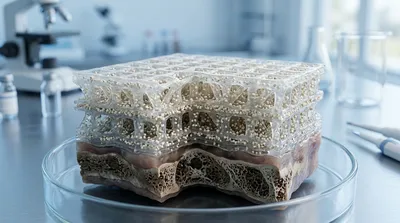
A literature note on GelMA/alginate-HAp composite GBR membranes, covering 3D printing, wet-state support, degradation behavior, and mineral-phase design.
View Details
A 2026 JCD checklist explains why CaHA dorsal hand studies should report product system, use state, use records, and follow-up findings.
View Details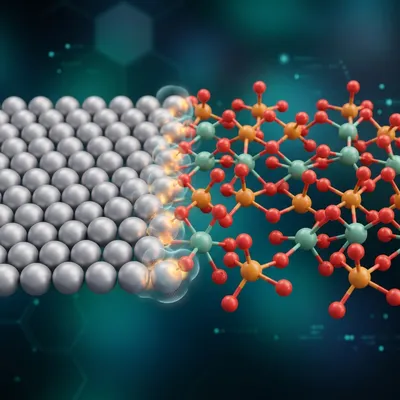
A 2026 RSC density functional theory study examines how HAp adsorbs on pure, Ca-doped, and Zn-doped magnesium surfaces and where interface evidence stops.
View Details
A technical look at how sterilization may affect HAp/CaHA raw materials and composite systems, from phase stability to carriers, packaging, and validation boundaries.
View Details
A technical review of JCD market-sample SEM papers, clarifying what CaHA microsphere images can and cannot support and where higher-level evidence is still needed.
View Details
On June 5, 2026, Aphranel® announced that its MagiCCrystal CaHA Filler had received EU MDR certification, alongside the launch of Arc™ and cumulative commercial deliveries exceeding 150,000 syringes. This marks a noteworthy milestone for China’s CaHA filler market.
View Details