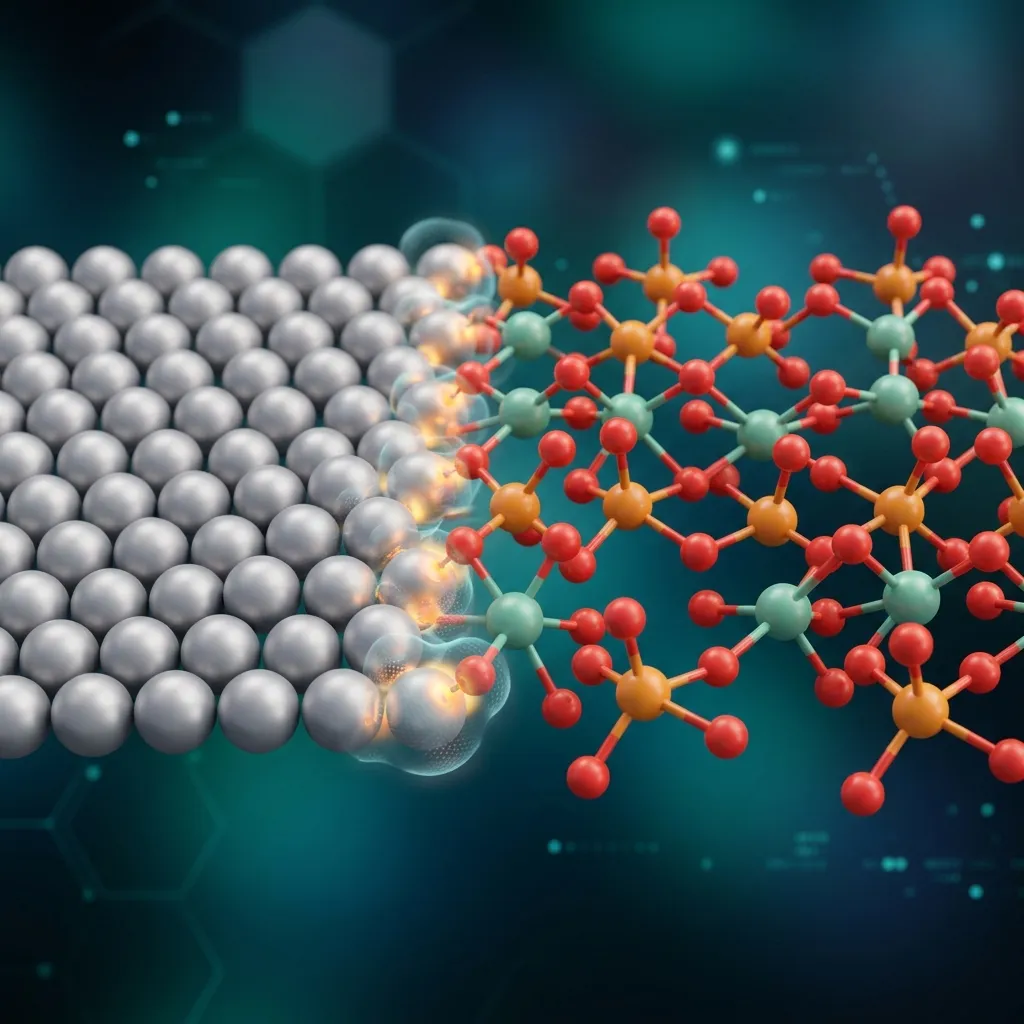
Biodegradable magnesium implants have an attractive premise: after providing temporary mechanical support, the material can gradually degrade instead of remaining in the body long term.
The same feature also creates a design problem. Magnesium reacts rapidly in physiological environments. If degradation is not controlled, an implant may lose mechanical support before tissue repair is complete. Hydroxyapatite (HAp; written as HA in the cited paper) coatings are one research direction for addressing this challenge.
HAp is chemically similar to the inorganic mineral phase of bone and is widely studied in orthopedic and dental materials. Applying an HAp coating to a magnesium surface may improve the contact between an implant and bone-related tissue, while also limiting direct exposure of the magnesium substrate to physiological fluids.
Before that can be translated into a coating strategy, one basic question comes first: how does HAp bind to the magnesium surface at the interface?
First published online on 15 June 2026, this Chalmers University of Technology first-principles study appeared in Physical Chemistry Chemical Physics. It analyzed single-layer HAp adsorption on pure Mg(0001), as well as Mg surfaces sparsely doped with calcium or zinc.
This was not a corrosion test, animal study, or clinical evaluation. It addresses an earlier interface question: once HAp is placed on magnesium, how do atoms move, how strong is adsorption, and how do alloying elements change the local interaction?
Putting HAp on a Magnesium Surface
The researchers used the Mg(0001) surface as the computational model and placed one HAp layer on top. To search for relatively stable positions, the HAp layer was translated across the magnesium surface and 25 positions within one surface unit cell were compared.
This is not a simulation of a finished bone screw. It is a simplified interface model designed to isolate local HAp–Mg interactions before adding the complexity of physiological fluids, protein adsorption, oxide layers, coating defects, or macroscopic geometry.
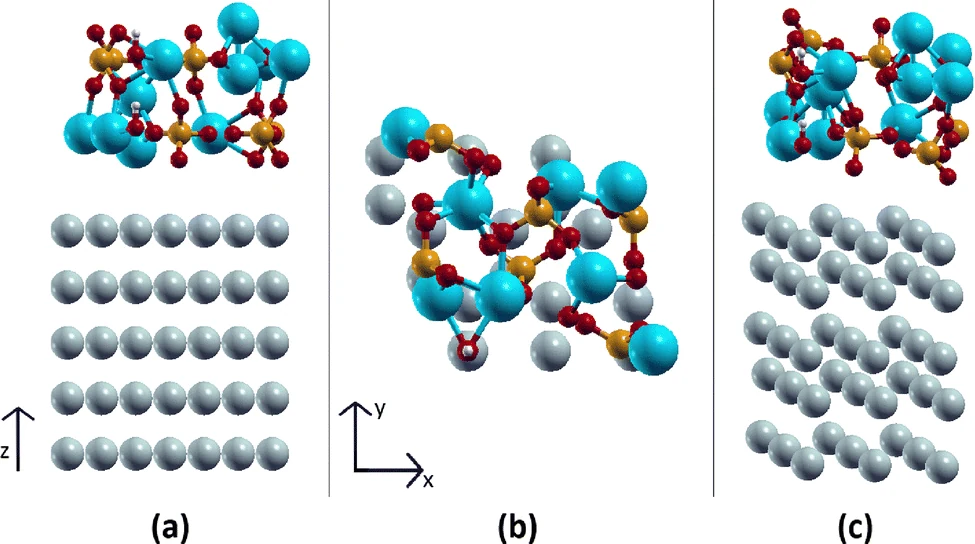
The figure helps define the scope of the paper. The subject is not a thick, real-world coating, but the atomic structure at the first contact layer between HAp and magnesium.
HAp Can Adsorb, but the Interface Is Not Locked
The calculations show that HAp can adsorb on pure Mg(0001). After full relaxation at the optimal adsorption site, the adsorption energy was −14.4 meV Å−2.
The team also compared the energy landscape as the HAp layer shifted laterally over the magnesium surface. The energy corrugation was small: the difference between the optimal and least favorable positions was 9.9 meV Å−2.
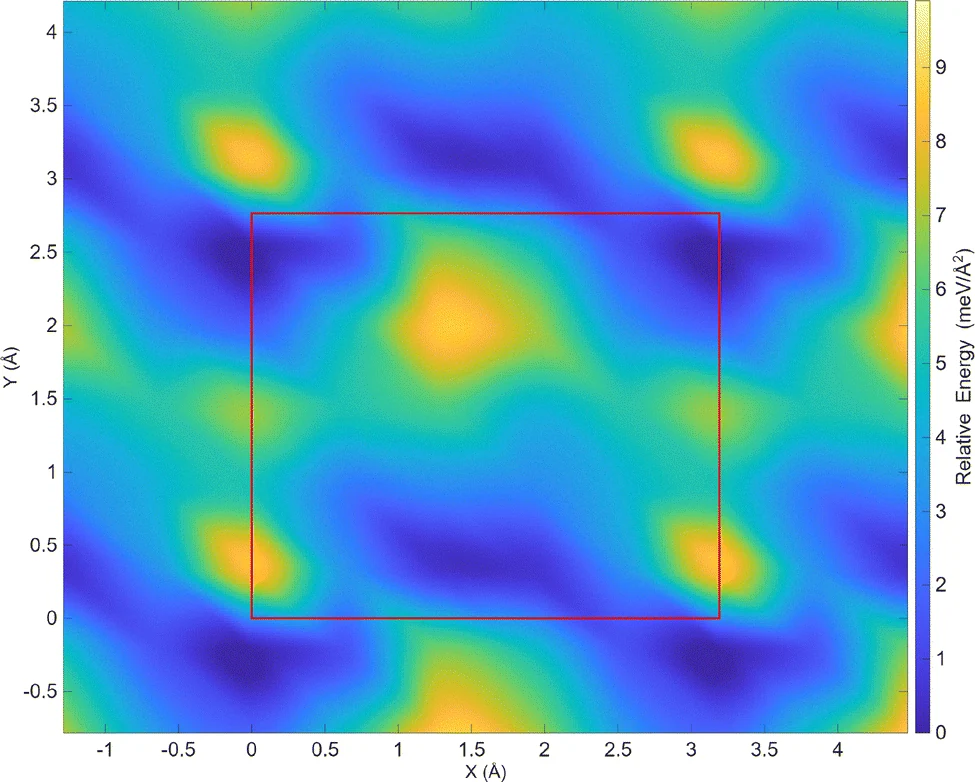
In practical terms, a single HAp layer can bind to an ideal magnesium surface, but it is not pinned to one unique lateral position. The authors suggest that this low corrugation may allow the HAp layer to slide under a relatively small force.
This should not be read as direct evidence that a real coating will delaminate. Actual implant surfaces include roughness, oxide or hydroxide layers, grain boundaries, defects, and multilayer coating structures.
The useful question is more restrained: when evaluating an HAp coating, it is not enough to confirm that HAp is present on the surface. The stability of the coating–metal interface also needs to be evaluated.
Does Calcium or Zinc Always Improve Binding?
Magnesium implant materials are rarely treated as perfectly pure magnesium. Small alloying additions can influence strength, corrosion behavior, and surface reactions. The study therefore examined sparse calcium and zinc doping at the Mg(0001) surface.
Overall, Ca or Zn improved HAp adsorption in many calculated configurations. Some doped structures had more favorable adsorption energies than pure magnesium.
That does not mean adding calcium or zinc is automatically better.
The position of the dopant mattered strongly. For example, when Ca occupied the (1,1) position, the HAp adsorption energy reached −21.2 meV Å−2. When Ca occupied the (0,2) position, the adsorption energy was only −5.2 meV Å−2, weaker than HAp adsorption on the pure Mg surface.
The key issue is not only which element is present in the magnesium alloy. It is where that atom sits near the HAp–Mg interface and which HAp atom it interacts with. The same nominal composition does not guarantee the same interface state.
A Calcium Atom Moves from Magnesium into the HAp Layer
One of the most notable findings comes from the calcium-doped model.
When a Ca dopant was placed under a void in the HAp layer, structural relaxation moved that Ca atom out of its original magnesium surface position and up into the HAp layer, leaving a vacancy in the magnesium surface.
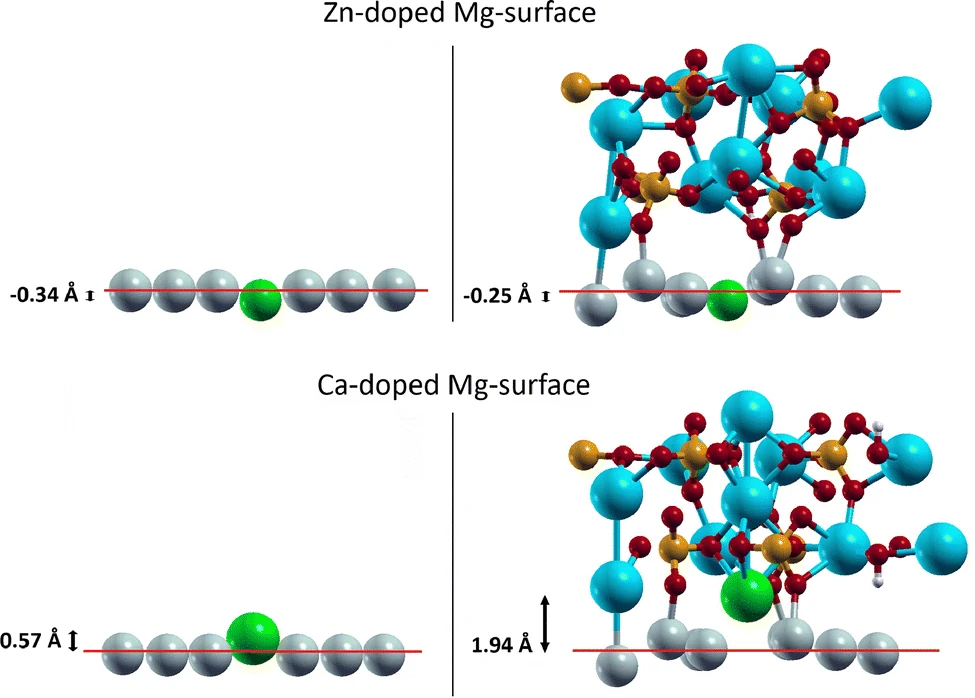
This is more than a coating simply sitting on a metal surface. At the atomic scale, the interface may restructure, and alloying elements from the substrate may participate in the local HAp environment.
The authors interpret this as reasonable because calcium is one of the main elements in HAp and is attracted to oxygen atoms in the HAp layer. When the geometry allows it, a calcium atom may prefer to move toward the HAp environment.
For Ca-containing magnesium alloys, this gives a useful interface-level perspective: alloying elements may not only change the magnesium substrate, but also participate directly in how the HAp interface forms.
What the Electron Density Maps Add
To understand the interface interaction further, the team compared electron density before and after HAp adsorption.
On pure magnesium, the more visible electron accumulation appeared near oxygen atoms close to the magnesium surface and between the lowest calcium atom in HAp and a magnesium atom. This indicates that the interface is not just physical contact; local electron redistribution occurs during adsorption.
In the Ca-doped model, some positions showed stronger local changes. The configuration in which the calcium dopant moved upward into the HAp layer showed pronounced electron accumulation around the dopant and neighboring oxygen atoms.
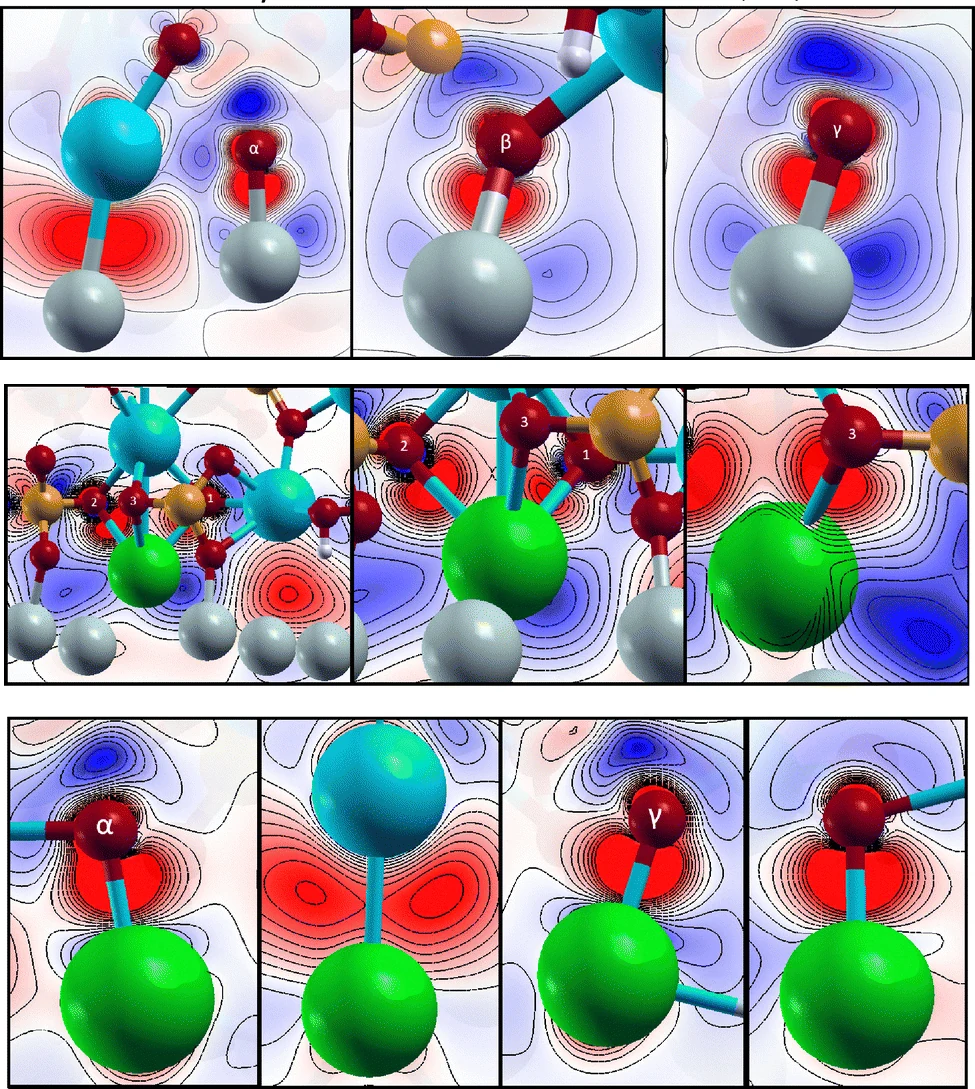
For non-specialist readers, these maps can be read as interaction-distribution maps. Stronger color changes indicate larger local changes in electronic state after adsorption.
Electron density change is not proof that a coating will be mechanically stronger or clinically better in the body. It shows that dopant identity and atomic position can change the local binding mode between HAp and magnesium.
What This Study Can and Cannot Support
This study does not provide a ready-made coating process for magnesium implants. It uses density functional theory and an idealized surface model to study contact between one HAp layer and Mg(0001).
Real materials also involve alloy composition and microstructure, oxide and hydroxide surface layers, coating thickness, pores and cracks, processing temperature, residual stress, body-fluid chemistry, protein and cell participation, mechanical loading, and long-term corrosion.
For that reason, the paper cannot directly prove that HAp coatings improve corrosion resistance in magnesium implants. It also cannot determine which magnesium alloy is clinically preferable.
Its contribution is interface-level insight. HAp can adsorb on magnesium; Ca and Zn often change and strengthen that adsorption; but the effect depends strongly on dopant position. In one Ca-doped configuration, the calcium atom can move from the magnesium surface into the HAp layer and participate in interface reconstruction.
This means HAp coating stability is not controlled only by the coating material. It is also shaped by substrate composition and local atomic structure.
What This Means for Material Development
First-principles calculations are useful for explaining atomic-scale causes. The next step still belongs to real materials. Coating adhesion, immersion behavior, electrochemical response, surface composition, cell response, and animal data are all needed before the computational trend can be translated into product-level conclusions.
For application-oriented R&D, the message is clear: coating design should not be evaluated solely on the basis of surface phase composition. Substrate composition, interface structure, coating process, and validation route need to be considered together.
Nanjing Junzhuo Biotechnology Co., Ltd. supports R&D teams with HAp/CaHA materials, β-TCP, BCP, and related calcium-phosphate bioceramics, with attention to particle size distribution, phase purity, crystallinity, morphology, batch consistency, microbiological control, and documentation support. For bone repair materials, surface coatings, and composite scaffolds, a stable material baseline helps connect computational models, surface experiments, and product verification.
Conclusion
Whether HAp coatings can make magnesium implants more stable cannot be answered with a simple yes or no.
This study indicates that HAp exhibits quantifiable adsorption and interfacial interaction on the modeled magnesium surface, and that calcium and zinc can alter that interaction. But coating stability is not decided by a single element. Atomic position and interface structure matter as well.
For biodegradable magnesium implants, an HAp coating is not merely a layer placed on top of metal. Atomic movement and electron redistribution at the interface may shape coating behavior from the beginning.
Understanding these details does not immediately produce a perfect implant material. It does help researchers design magnesium alloy composition, surface treatment, and HAp coating structure with a more precise view of the interface.
This article is a technical interpretation of published literature. The cited paper is an atomic-scale computational study and does not include corrosion tests, animal experiments, or human clinical data. Its findings should not be directly extrapolated to the safety, effectiveness, or clinical performance of any specific medical device.
References
- Berg A V, Forster A, Hansson T, Jernstedt A J, Salminen E, Schröder E. First-principle study of the influence of hydroxyapatite on magnesium surfaces. Physical Chemistry Chemical Physics. 2026;Advance Article. DOI: 10.1039/D6CP01070A. RSC article page.