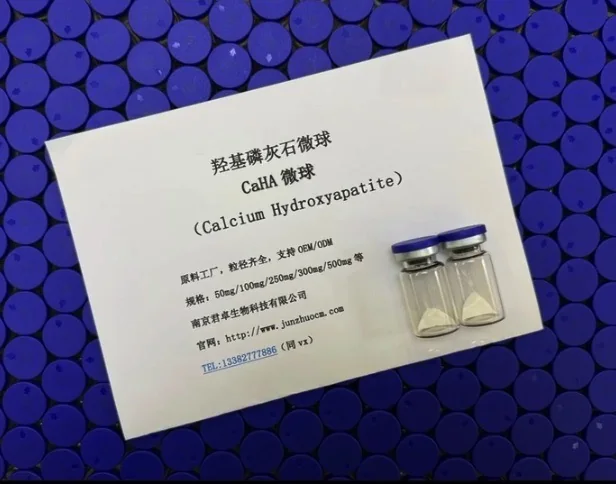
OEM Starts with Clear Specifications
For hydroxyapatite microsphere projects, efficient OEM cooperation rarely begins with a simple availability check. It begins with a shared understanding of particle-size range, morphology, purity targets, and the validation requirements the project is expected to meet.
For that reason, effective OEM work is usually better handled as an ongoing development partnership than as a one-time supply transaction.
Why Consistency Matters
Hydroxyapatite microspheres often enter more complex systems such as bone cements, injectable fillers, composite scaffolds, and other regenerative materials. If batch-to-batch variation is too large, teams may need to repeat formulation work, recheck rheology, or reconsider downstream performance assumptions.
Stable quality, parameter transparency, and traceability are therefore basic conditions for smooth project progress.
When OEM or Joint Development Makes Sense
OEM or joint-development models are especially useful when a team already knows the material direction but still needs to refine particle size, morphology, packaging, technical files, or the validation route. In those cases, earlier participation from the material side can shorten feedback loops and reduce avoidable risk.
Nanjing Junzhuo can support hydroxyapatite microsphere projects through sample discussions, parameter confirmation, batch-stability control, and application-focused technical support.