Low-Temperature Coating Design
This research focuses on hydroxyapatite coatings formed on titanium substrates under relatively low-temperature conditions. It compares copper- and zinc-substituted systems and follows how the synthesis route affects phase structure, crystallinity, surface morphology, and biological function.
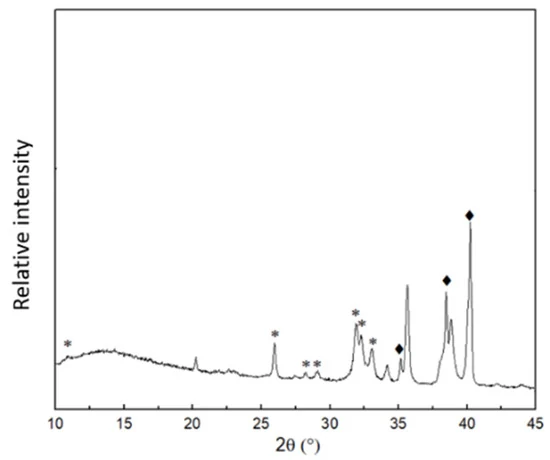
By combining sol-gel preparation with low-temperature crystal growth and then evaluating the coatings through XRD, FTIR, Raman, and SEM, the study builds a clear picture of how processing choices shape the final surface.
What the Low-Temperature Route Changes
The resulting coatings were composed of relatively uniform nanoscale hexagonal particles, suggesting that the process can maintain a stable surface structure without sacrificing activity. For coating development, that matters because surface uniformity and phase control influence cell response, mineralization behavior, and bonding performance.
A lower-temperature route also makes it easier to compare the influence of added functional ions without overwhelming the system with harsher processing effects.
Copper and Zinc Do Not Behave the Same Way
The most useful result is the difference between the two substitution paths. Copper-substituted hydroxyapatite showed clearer antibacterial activity, especially against Bacillus subtilis, while the zinc-related system did not produce the same level of antibacterial effect.
This means that adding functional ions is not a simple one-step upgrade. Ion selection changes phase composition, reaction behavior, and final biological performance, which is exactly why this type of comparison is valuable for functional coating design.
Why the Study Matters for Development
For orthopedic, dental, and surface-modification projects, the study offers a useful reminder that low-temperature synthesis and ion design should be considered together. A stable coating structure and a real functional gain are both necessary if the material is meant to solve a practical problem such as antibacterial performance.
The original study title is Calcium Hydroxyapatite Coatings: Low-Temperature Synthesis and Investigation of Antibacterial Properties.