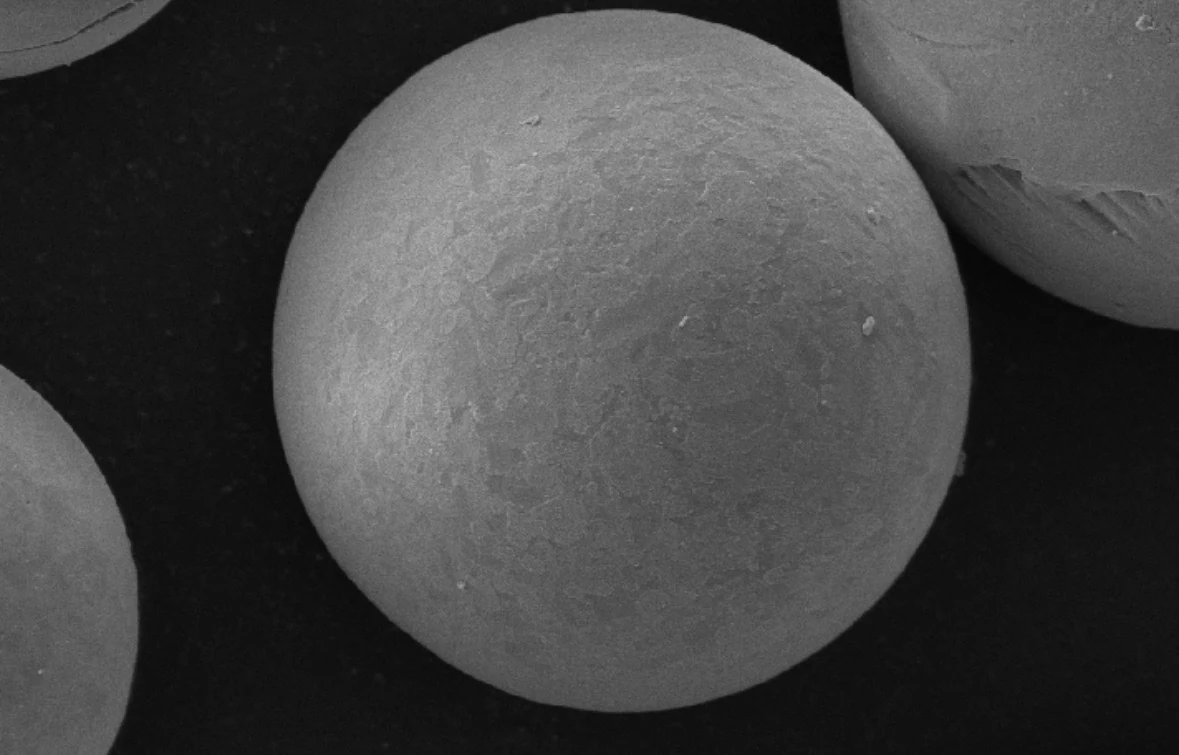
Bone powder is a common informal term, but it does not identify one fixed composition. Bone-graft particles may be allogeneic, xenogeneic, or synthetic calcium-phosphate materials. Their source, processing, mineral phase, and organic content can differ substantially.
Synthetic hydroxyapatite microspheres describe a defined material form: particles made with HAp/CaHA as the principal inorganic phase and shaped to a controlled size and external geometry. The two categories should not be treated as equivalent simply because both relate to bone mineral.

First Define What “Bone Powder” Means
Evaluation of bone-graft particles begins with their source and product category. Demineralized bone matrix, processed allogeneic or xenogeneic bone particles, and synthetic calcium-phosphate granules cannot share one material conclusion simply because they have a similar appearance.
Source alone also does not establish a safety or performance ranking. Each material must be assessed through its composition, manufacturing process, quality controls, approved scope, and relevant evidence.
Microspheres Add a Formed Particle Structure
Hydroxyapatite microspheres add structural attributes such as size distribution, sphericity, surface state, pore or dense structure, and particle integrity. Even with HAp/CaHA as the principal phase, different forming and heat-treatment processes can produce different microsphere states.
A microsphere should therefore not be described generically as bone powder. Conversely, the presence of an apatite phase in a bone-graft product does not make it equivalent to a synthetic CaHA microsphere.
A Material Name Does Not Define Product Use
Related materials are not automatically interchangeable. Bone-defect graft particles, coating feedstocks, research-grade CaHA microspheres, and finished injectable formulations have different design goals, manufacturing requirements, and evidence boundaries. Intended use must be read from the relevant product documentation and regulatory scope.
For a fuller explanation of the boundaries among CaHA starting powder, formed microspheres, and finished injectable systems, see CaHA Powder, Microspheres, and Injectable Systems: What's the Difference?
This article explains the material-level distinction between synthetic hydroxyapatite microspheres and different bone-graft particles. It does not compare specific product performance, recommend clinical use, or define an approved indication.