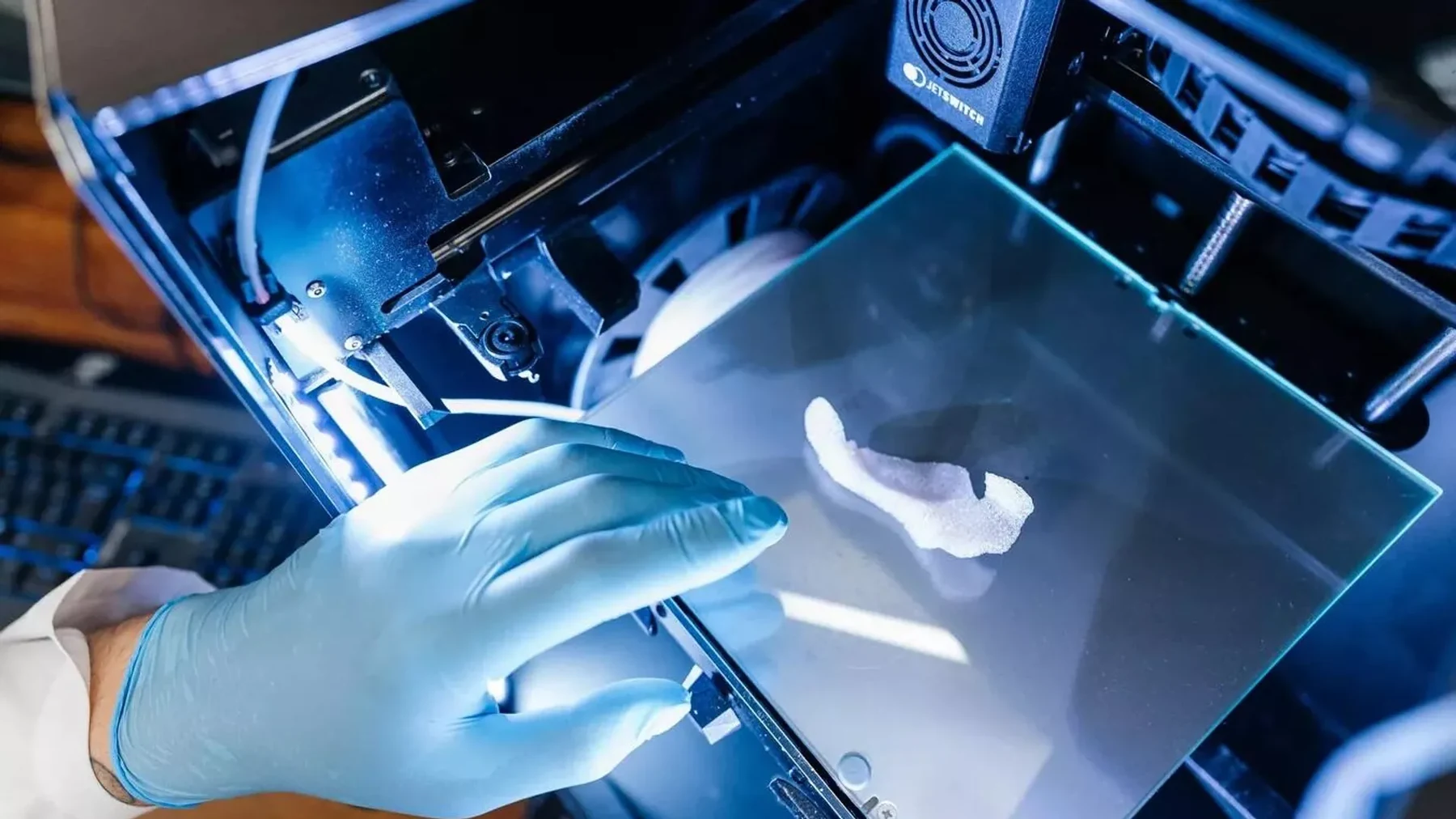
A Lower-Cost Route to Personalized Implants
Researchers at Tomsk Polytechnic University proposed a new method for producing more affordable personalized implants for maxillofacial surgery. The base implant is 3D-printed from a fluoropolymer, and hydroxyapatite particles are then applied to the surface to improve how cells attach and proliferate.
The approach is designed to combine anatomical customization with better surface bioactivity, which is especially important for implants that need to interact more effectively with bone tissue.
Why Hydroxyapatite Was Added
The fluoropolymer itself is useful because it is comparatively inert and suitable for manufacturing, but it does not integrate with bone particularly well on its own. The researchers addressed that limitation by using a selected solvent system to create a swollen surface layer where hydroxyapatite particles can adhere.
This turns the implant surface into a more tissue-friendly interface without abandoning the advantages of 3D-printed polymer fabrication.
Why the Study Matters
The method connects additive manufacturing, surface modification, and implant personalization in a single workflow. It also suggests that relatively accessible laboratory methods may be able to replace more expensive plasma-based surface-treatment routes in some cases.
For biomaterials teams, the study shows how hydroxyapatite can improve the biological performance of customized implant surfaces in real development work.